The Niche Traveller's
Journal
INSIDER TIPS
02.09.2026
Lanserhof Sylt: My Four-Day Health Reset
Can four days really make a difference? Our founder, Kerstin Bognár, decided to find out, checking into Lanserhof Sylt for one of its new Short Stays. Between medical assessments, a pared-back diet, infrared light, cryotherapy, Pilates and long walks through the dunes, she discovered that taking time out for your health doesn’t necessarily require two weeks away from everyday life. Sometimes, four days are enough to pause, take stock – and come home seeing a few things differently.
Written by:
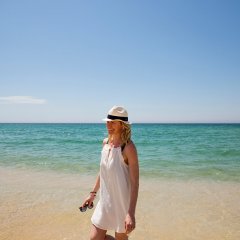
Kerstin Bognár
CEO and Founder

NICHE × LANSERHOF – THE BACKSTORY
The last – and only – health retreat I had ever done was an Ayurvedic cure in Sri Lanka more than 20 years ago. Back then, Ayurveda was having a moment: oil poured over the forehead, cleansing rituals, a week of healthy food, porridge, dhal curries and tea, a visit to a Buddhist temple – and, by the end of it, knowing whether you were a Vata, Kapha or Pitta type.
Over the two decades since, I occasionally found myself longing for some kind of retreat again. But, as so often happens, there simply never seemed to be room for it. No time. If anything, quite the opposite.
I travel constantly, visit extraordinary places and beautiful hotels, many with wonderful spas and wellness facilities. Yet even on family holidays, I rarely manage to switch off completely. Anyone who runs their own business will probably recognise the feeling – especially in turbulent times. I’m not complaining. I’m simply saying that a proper health retreat never seemed to fit.
Of course, I had been following the longevity movement. And naturally, there were plenty of programmes and concepts I would have loved to try. But again: no time. Other hotel partners needed visiting, other trips needed testing, priorities had to be set. As a mother, partner and entrepreneur, I suspect I’m far from alone in this.
Which is why I was particularly intrigued when the idea of a collaboration between Lanserhof and The Niche Traveller first came up.
The reason? Lanserhof now offers shorter programmes alongside its classic seven-, ten- and 14-day stays. Three, four or five days, with different Short Stays focusing on different aspects of health and prevention. In other words: ideal for people whose lives look a little like mine. Busy parents, professionals, entrepreneurs, high performers – people who simply cannot imagine disappearing for a week or two, but who would very much welcome a first taste of what a proper health retreat can offer.
Bingo, I thought.
Because this isn’t just relevant to me. It reflects the lives of many of our clients, too. They crave time for themselves and for their health, but everyday life keeps getting in the way. The children are still small. Their partner travels constantly. The next family holiday is already coming up. They’ve just launched a business. Or something else entirely.
There are a thousand reasons. And probably just as many excuses.
So, thanks to the new Short Stays, I decided simply to try it. Because this, after all, is the reality of a full life.

WHAT HAPPENS AT LANSERHOF?
Sylt – Germany’s much-loved North Sea island, where I spent many childhood holidays and later even got married – is the northernmost of Lanserhof’s three locations. Following Lans and Tegernsee, Lanserhof Sylt opened in List a few years ago.
Its architecture is remarkable. Inspired by the island’s traditional thatched houses, the Lanserhof buildings are thatched too – albeit on an XXL scale. Despite their generous proportions, they settle surprisingly naturally into the dunes, with views either across the Wadden Sea or over the heathland towards the west coast. Inside, an enormous white spiral staircase dominates the entrance, while the rest of the interiors feel warm, calm and quietly luxurious.
The morning after check-in, I have my first consultation with my doctor. I’m weighed and measured, blood is taken – from my arm and my ear – and then comes the introduction to the programme.
My Short Stay is the Essential Health Check. With only four days here, proper fasting wouldn’t make much sense, so my doctor and I agree on a level that allows me to eat – just considerably less than I would at home. Three things are off the menu at Lanserhof anyway: coffee, alcohol and refined sugar.
By day one, I have a headache.
Coffee is my vice. I drink several cups throughout the day. I probably don’t actually need it, but it has become a reward ritual – and, supposedly, something that helps me deal with stress.
Now, instead, there are countless teas. And water. Lots of water – although you’re encouraged to drink very little immediately before, during and after meals.
My initial assessment includes bioimpedance analysis, blood pressure, lactate and metabolic testing, blood work and a detailed consultation with my doctor. We then discuss the stay and decide on my individual programme and dietary level.
We opt for the Active Cuisine, which is still considerably lower in calories than what I would normally eat at home.
Later that morning, I join a fairly demanding – but excellent – Pilates class. Then comes lunch, which I soon realise will become one of my favourite moments of each day. It is by far the largest meal and usually even includes a small dessert.
Afterwards, I try photobiomodulation: lying on something resembling a treatment bed while the body is exposed to infrared light from above. Next up is a VO₂ max test.
Then I meet Simon, one of Lanserhof’s sports scientists. Among other things, we measure my grip strength. Along the way, he gives me some genuinely useful advice for everyday life and introduces me to the bouldering wall. Naturally, I have to try it immediately – and love it. The gym, incidentally, is superbly equipped.
Towards evening, I have a wonderfully relaxing therapeutic massage, followed by dinner. By then, I am so tired that I just about manage a visit to the steam room before heading straight to bed.
Throughout the day, Lanserhof Sylt also offers a range of complimentary activities open to all guests: yoga, Pilates, coordination training, meditation, Nordic walking, cooking classes, talks and even occasional small concerts.
Every day also begins at 7am with a changing morning programme. Guests head either to the west coast or the Wadden Sea side of the island and start the day outside together, with a short walk or gentle exercises in the fresh air.

DAY TWO
I begin my second day with an easy run through List and the dunes before breakfast. Normally, I barely leave my bed before having a morning coffee, so it is reassuring to discover that life does, in fact, continue without one. Apparently, even running is possible without coffee first. Much of it, it turns out, is habit – and a little willpower.
Every morning I order porridge. At Lanserhof, breakfast also comes with the option of a piece of bread, which you are encouraged to chew for as long as possible to stimulate saliva production. It sounds almost absurdly simple, but feels surprisingly unfamiliar when your usual mornings are spent mentally halfway into the next appointment.
Later, I have a wonderfully relaxing detox drainage treatment, then spend some time sitting in my beach chair in the sunshine. Quiet. Sun. Nothing to do for a moment. Bliss.
My reading companion during the stay is Eric Topol’s Super Agers. And I keep coming back to the same thought: it is remarkable how much we can actually do ourselves to influence how healthily we age.
Before lunch, I have a hormone consultation, which I booked in addition to my programme. Again, I meet an excellent doctor. We talk about prevention and the options available as hormone levels begin to change.
In the afternoon, I’m invited to a lovely small reception. Photographer Kiki Kausch is exhibiting her work at Lanserhof, accompanied by a talk with Medical Director Dr Jan Stritzke.
And then it is time for the cryotherapy chamber.
I’ll admit, I’m slightly nervous. I’ve never done it before. I take cold showers after the sauna and can manage relatively cold water without too much trouble. I find things like ice bathing fascinating – but, until now, they have remained something other people do. I simply get cold too easily.
Before we begin, the extremely kind therapist talks me through what to expect. There are three chambers: the first is minus 10°C, the second minus 60°C and the third minus 110°C.
The aim is to spend around ten seconds in each of the first two chambers before staying for three minutes at minus 110. Throughout the session, I remain in visual contact with the therapist. If I want to stop, he can get me out immediately – or I can simply walk back through the progressively warmer chambers myself.
I’m equipped with a hat, gloves and face covering; my shoes stay on. My blood pressure is checked. And I get to choose a song.
I go for Jessie J’s Price Tag.
Off we go.
The first chambers are fine. Minus 110 is something else entirely. Seconds suddenly move at glacial speed. Through the window, the therapist shows me the stopwatch. One minute done.
It’s tough. The cold starts to bite and slowly my extremities begin to ache. At one minute thirty, I make a deal with myself: I’ll get to two minutes. I can spend the final minute at minus 60.
And that’s exactly what I do.
I’m very happy to be outside again – and also disproportionately proud of having managed two full minutes at minus 110°C. The therapist reassures me that not making the full three minutes on a first attempt is completely normal.
Immediately afterwards, I feel incredibly energised.
A few hours later, admittedly, I am also incredibly tired.

DAY THREE
On day three, I have a metabolic assessment with the nutritionist, followed by ultrasound examinations of my thyroid and abdomen.
After lunch comes one of Lanserhof’s signature treatments: the Essential Salt Therapy. First the body is massaged with oil, then salt is added, before everything is washed off in the shower. Afterwards, I genuinely feel a little bit reborn.
The weather is so beautiful that afternoon that I borrow one of the e-bikes and cycle from List towards the Ellenbogen nature reserve. The bikes are excellent and, despite the strong Sylt wind, the roughly 15-kilometre ride is great fun.
On my final evening, I take my time over dinner and enjoy the spa once more: the pool, steam room, sauna and terrace. And I realise just how quickly four days can disappear.
The following morning, there is one final medical consultation before I leave.

WHAT I LEARNT IN FOUR DAYS
Four days are obviously not enough to switch off completely, undertake a proper fast or perhaps give up a long-standing habit for good. But four days are enough to establish a status quo. To take a closer look. And, perhaps most importantly, to understand what you can take home with you and realistically integrate into everyday life.
The tests, results and conversations gave me a surprising number of insights and small aha moments. The fact that I developed such a headache from caffeine withdrawal on day one was a lesson in itself. I will continue to drink coffee – I simply enjoy it too much. But perhaps it doesn’t need to be four cups a day. Two will probably do.
I’ve also started questioning some of my eating habits. Instead of having my biggest meal in the evening, I want to try shifting more of that energy intake towards lunch, then eating less, lighter and – above all – earlier in the evening. And not just for myself, but, wherever possible, for my family and children too.
The stay also reinforced my desire to keep going with the exercise I already do, while becoming more conscious about building actual pauses into a busy working day.
But what probably impressed me most was the all-in-one aspect of the experience: being able to fit so many medically grounded assessments, measurements and conversations into just a few days and leave with a remarkably clear picture of where I stand right now.
I know which markers look good, which areas I should keep an eye on and where I might want to make a few changes going forward. And, of course, anyone who wants to go further can add an extraordinary range of treatments and diagnostics. From 3D full-body scanning and Cellgym to targeted infusions, there is very little Lanserhof doesn’t offer.
Perhaps that is also what I like most about the Lanserhof approach. It doesn’t feel as though everything is about relentless self-optimisation or chasing the promise of the longest, most perfect life possible.
It is much more about prevention. About paying attention to your health before you have to. About creating the best possible conditions to remain healthy, active and happy as you get older.
And that seems like something worth investing in.
Anyone wanting to fast properly, go deeper or work more sustainably on specific health goals should certainly allow more time and opt for one of the longer programmes. But for those who, like me, have always thought that a health retreat simply doesn’t fit into their lives right now, the new Short Stays are a very good way to start.
And that is precisely why Lanserhof feels like such a natural fit for The Niche Traveller.
Because, ultimately, it is no different from any other journey: it is about finding what is right for the individual. Three days might be perfect for one person; five may make more sense for another. Sometimes, ten or 14 days really are what you need. Essential Health Check, Detox, Longevity or an entirely different focus – not every programme is right for every person or every stage of life.
At The Niche Traveller, we are happy to advise you on which Lanserhof location, programme and length of stay will suit you best. Lanserhof stays can be requested and booked directly through us – as always, individually tailored to your needs.
Prefer to book directly? Of course. Lanserhof’s experienced team will be happy to help with any questions. Just make sure to mention that you are booking on the recommendation of The Niche Traveller: you will receive a €150 resort credit to use during your stay – a lovely extra towards a treatment such as a facial or massage.
And me?
Next time, I’d like to stay longer.
Four days were a beginning. And a very good one.